How to Add Reviews to your Shopify Store and Boost Customer Trust
How to Add Reviews to your Shopify Store and Boost Customer Trust
When marketing your store, having a first person voice can create distrust because of financial gain. Reviews are a form of social authenticity that can build trust in your store. This article explains how you can go about generating external reviews and build your stores trust factor.
Last updated on
Published on
November 14, 2023
November 13, 2026
•
7
minutes
If we look at the average e-commerce store, most of them are often overwhelmed by issues. The case is almost always the same. The majority of failing e-commerce stores make no attempt to build consumer trust and only provide subjective information about their products. We see endless examples of stores sort of “falling through the cracks” because their attention shifted away from the fundamentals.
The most basic example we can give you is this: when you have a customer who arrives at your store looking for a specific item that you sell. Even if they found exactly what they wanted, they still ask themselves if your online store can be trusted. If we take the most basic Shopify store; we can see that it is generally featureless, often incomplete, and takes little to no effort to assure shoppers. If we cannot even convert a shopper with high purchase intent, then we run the risk of seeing this problem occur over and over again.
Short answer: Shopify gives every store a basic, free way to collect reviews through its Shop channel, and that's enough if all you need is stars on a product page. For everything else — a dedicated reviews page, automated collection emails, photo and video reviews, and reviews that actually talk to your loyalty and referral programs — you'll want a dedicated platform. This guide walks through setting that up with Growave, step by step.
This is exactly why reviews play such a crucial role in e-commerce since they focus on building trust and credibility. At a most basic level, customer reviews provide independent advocacy for your business and confirm your product marketing. Growave's own merchants show what that looks like at scale: UNIQSO, a Malaysia-based beauty retailer, has collected close to 25,000 reviews through its case study with Growave — and every one of those reviews does the same job for the next shopper who lands on that product page for the first time.
Shopify, one of the world’s leading e-commerce platforms, makes it easy to harness the full power of reviews. Apps are the most practical ways to add reviews to Shopify but they also have some of the most powerful features anywhere. In this article, we will guide you through the complete process and show you in detail how to add reviews to Shopify stores.
Step One: Choosing the Best Reviews App
One of the reasons why Shopify is so successful as an e-commerce platform has in part to do with the thousands of apps designed intentionally for their e-commerce merchants. Choosing the right app can be trickier than it seems as each app is unique since they are built by independent teams. Choosing the right app has to do with the respective features of each app and how they fit into your needs. The top-rated Shopify review apps are the smoothest, most dynamic, and often have the best designs.
We’ve established that each Shopify app is unique, but there are established features that are considered best practices in e-commerce. This section is dedicated to the features you should expect when adding reviews to Shopify.
Branding and Layout Design: Your app of choice is required to have at least basic branding options since these apps are built to fit the general market. No one Shopify store is like the next so having comprehensive branding options is essential. While you can control branding, the hard-coded features are not so customizable, so keep a keen eye on how they fit into your strategy.
On-Page Integration: This involves the functional potential of your app, its location, and its structure on your pages. Knowing where and how these features integrate; includes which pages you can add reviews, their position on the pages, your layout options, and the ability to create separate pages.
Widgets or Sidebars: The most popular review apps have sidebars or widgets that appear on the outskirts of the browser window. They are collapsable pop-ups that improve how customers interact with your e-commerce store, by making your reviews more accessible but also easier to use.
Email Automation: A crucial component of any review program is the ability to automate review request emails, customize the content of those emails, and create customer questions for research purposes. This process can both accelerate the collection process and increase the proportion of customers that leave reviews.
Rewards for Reviews: It is common for businesses to seek reviews for the benefit of brand credibility. The process can be slow for some industries and at certain business stages. As a countermeasure, it has become common practice for review apps to offer discounts or points for customer reviews. This can make it highly engaging for customers to leave reviews which can have a substantial effect on your store's trust factor.
Review Types: Reviews can come in a variety of different formats from testimonials, cooperative case studies, and photo reviews. Observing the review types that are most effective for your brand and matching them to the capabilities of your reviews app is an important consideration.
Verification and Badges: The authenticity of your review program is subject to question. The most effective review apps often have a form of confirmation such as trust badges or a method of verifying the authenticity of reviews. The most effective apps will also have the ability to moderate customer reviews and identify possible abuses.
Data Visualization: A central component of any app, not just review apps, is the ability to analyze your program performance. Just by being able to monitor core metrics, you have the ability to make critical adjustments and enhance your program performance.
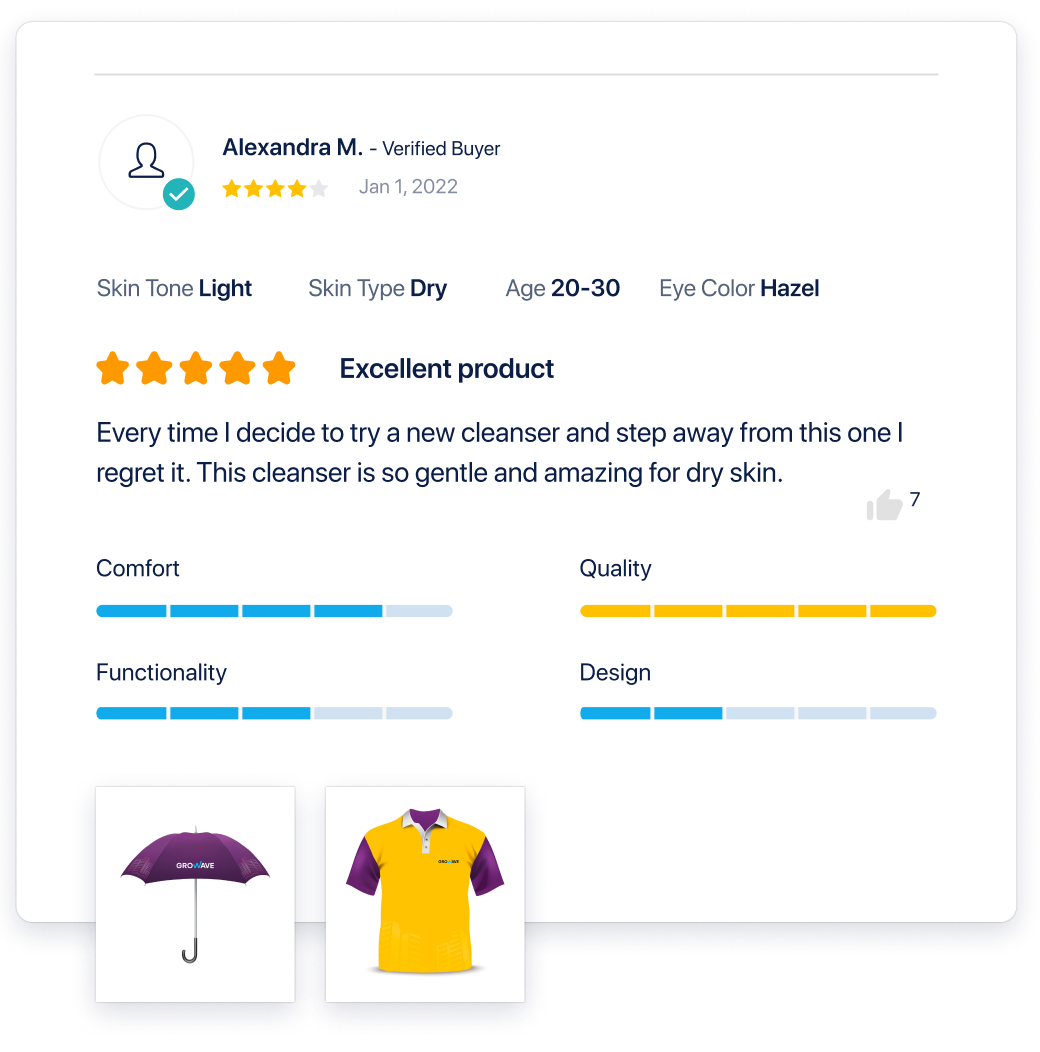
Example of Shopify product review
Shopify's own Shop channel gives every store a basic, free layer of reviews — enough to get started, but it stops there. A five-star review collected natively doesn't do anything else: it doesn't earn the customer loyalty points, it doesn't trigger a referral prompt, it doesn't feed your wishlist data. That's the gap a dedicated platform closes. In Growave, a review, a loyalty point, and a referral all live against the same customer profile — so the checklist above isn't just what to look for in any app, it's what we built around.
Step Two: Installing a Reviews App on Shopify
Once you’ve chosen a reviews app it’s time to install it into your store. This process is easy and is highly based on the app that you’ve chosen to use. Each onboarding process is a little different but there should be a support team available in case you encounter any issues.
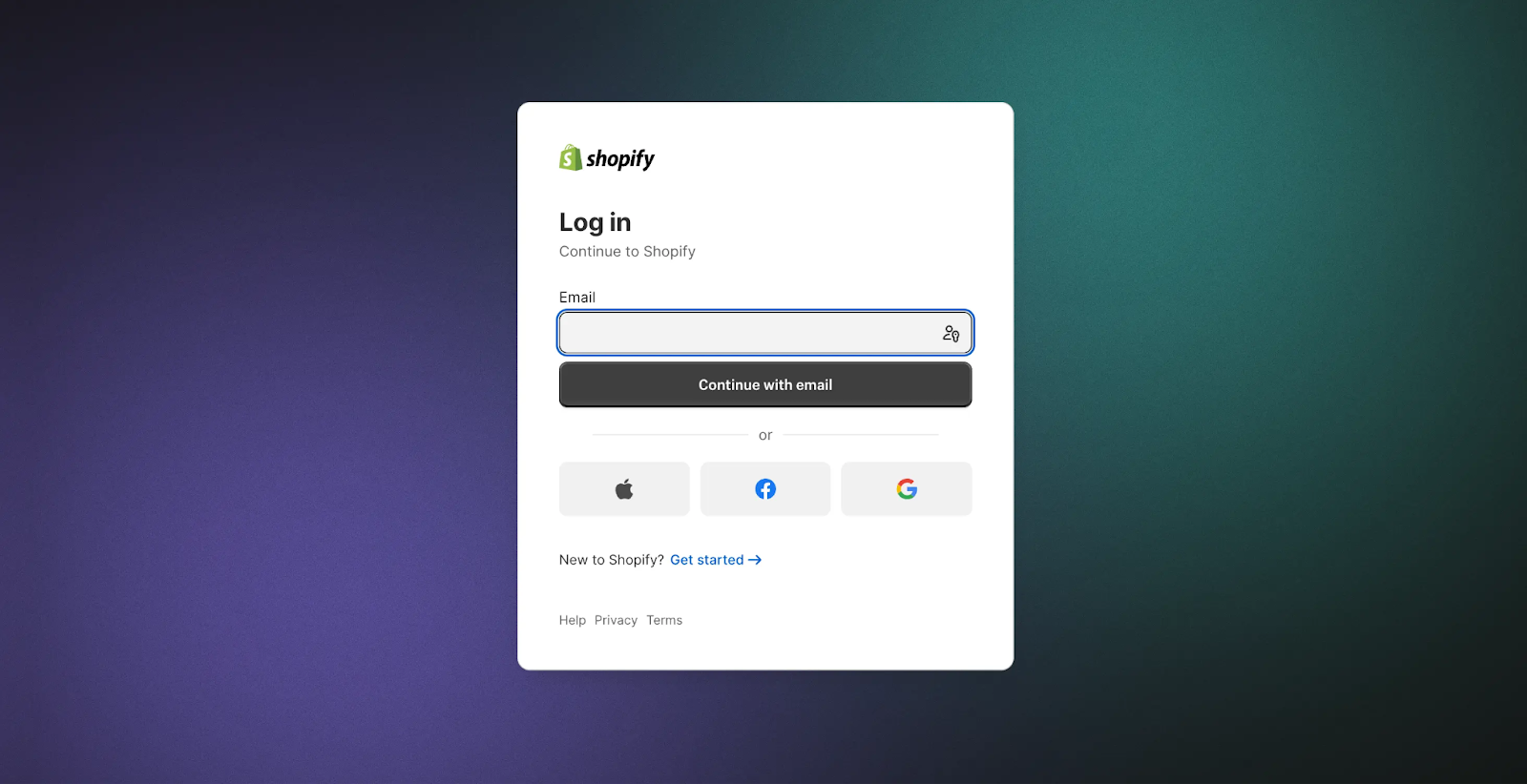
1. Log in to your Shopify admin panel. This process is the same for any one attempting to visit their Shopify admin panel. In order to arrive to this log in portal, all you need is to visit the Shopify Website.
Shopify Login Portal
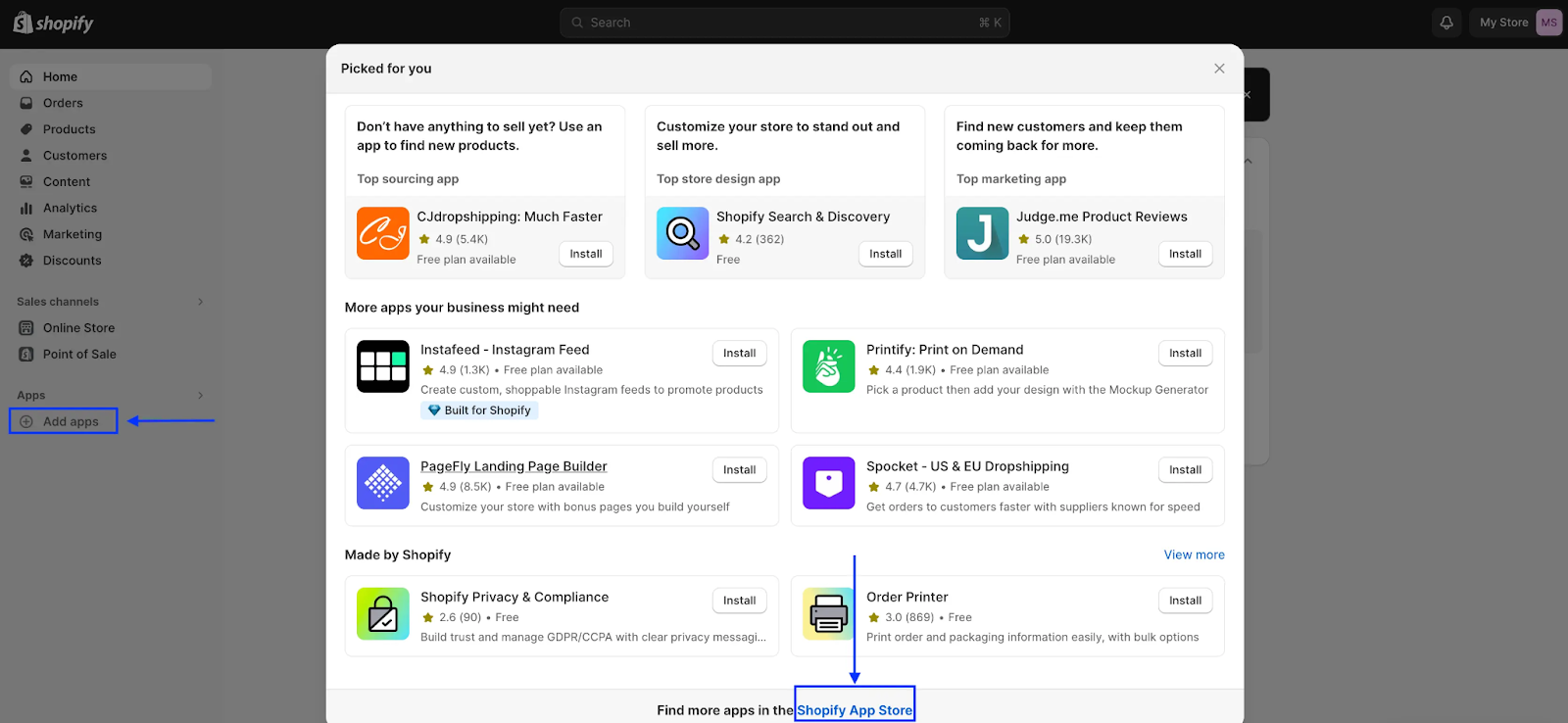
2. Click on Add apps and search or Visit the Shopify App Store. Remember to check customer reviews, ratings and read about the feature of any reviews app you choose for your e-commerce store.
Finding your Shopify reviews apps
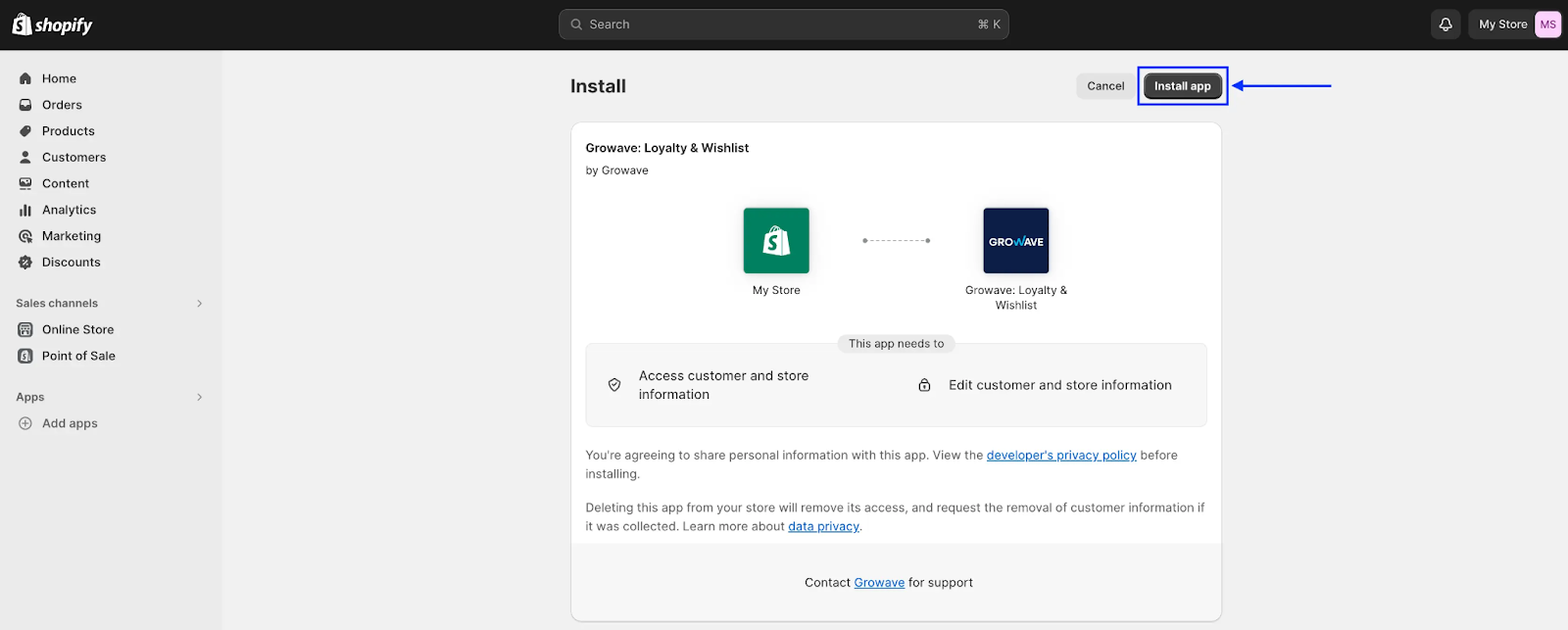
3. Click Install and follow the on-screen instructions to complete the set-up process. Once this is completed your app should be ready for customization.
Installing the reviews app on Shopify
Step Three: Configure your Review App
After installation configure the review app to suit your store’s needs. This typically involves customizing the appearance of review widgets, setting up review request emails, and integrating with your product pages. Each app will have its own interface and settings, so be sure to follow the app’s documentation or support resources for guidance.
How to add a review page on your Shopify store
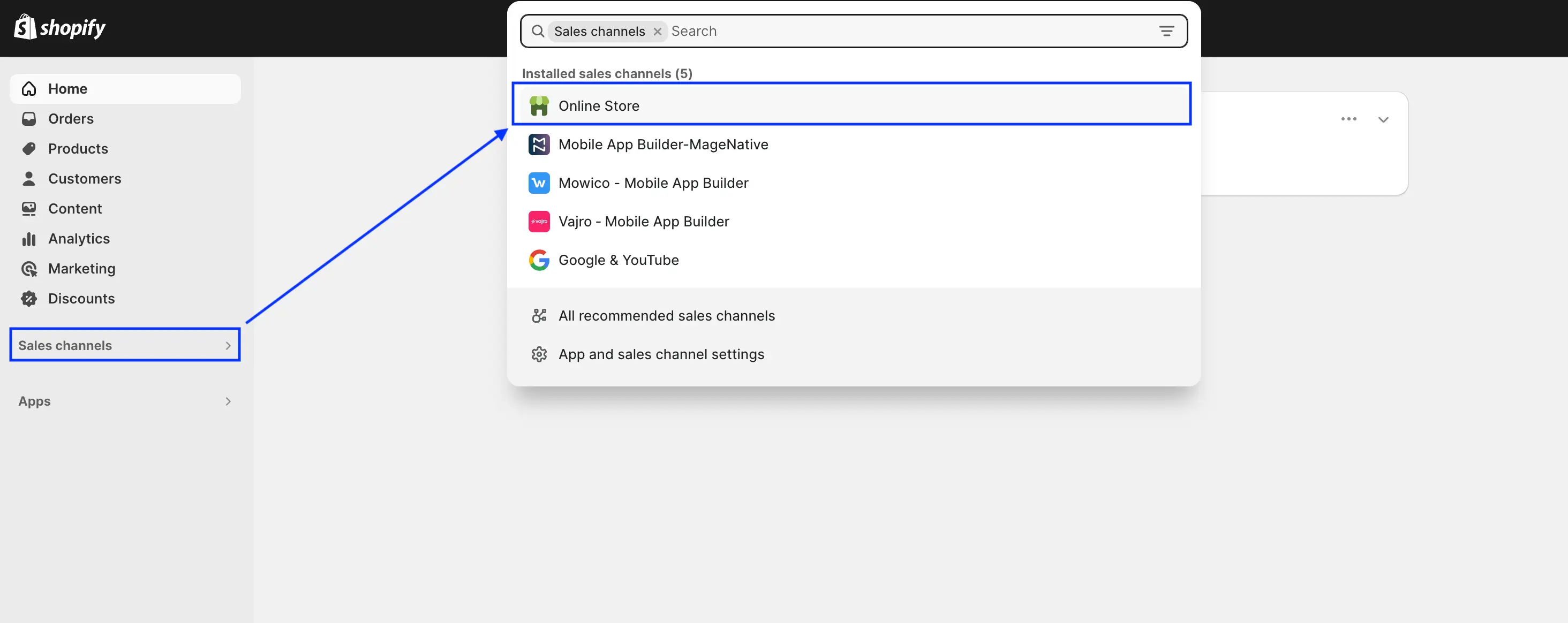
1. Create your dedicated reviews page by navigating to Sales Channel > Online Store > Pages. Select Add page give your page a name and click that page in the options Review Page.
Creating a dedicated review page on Shopify
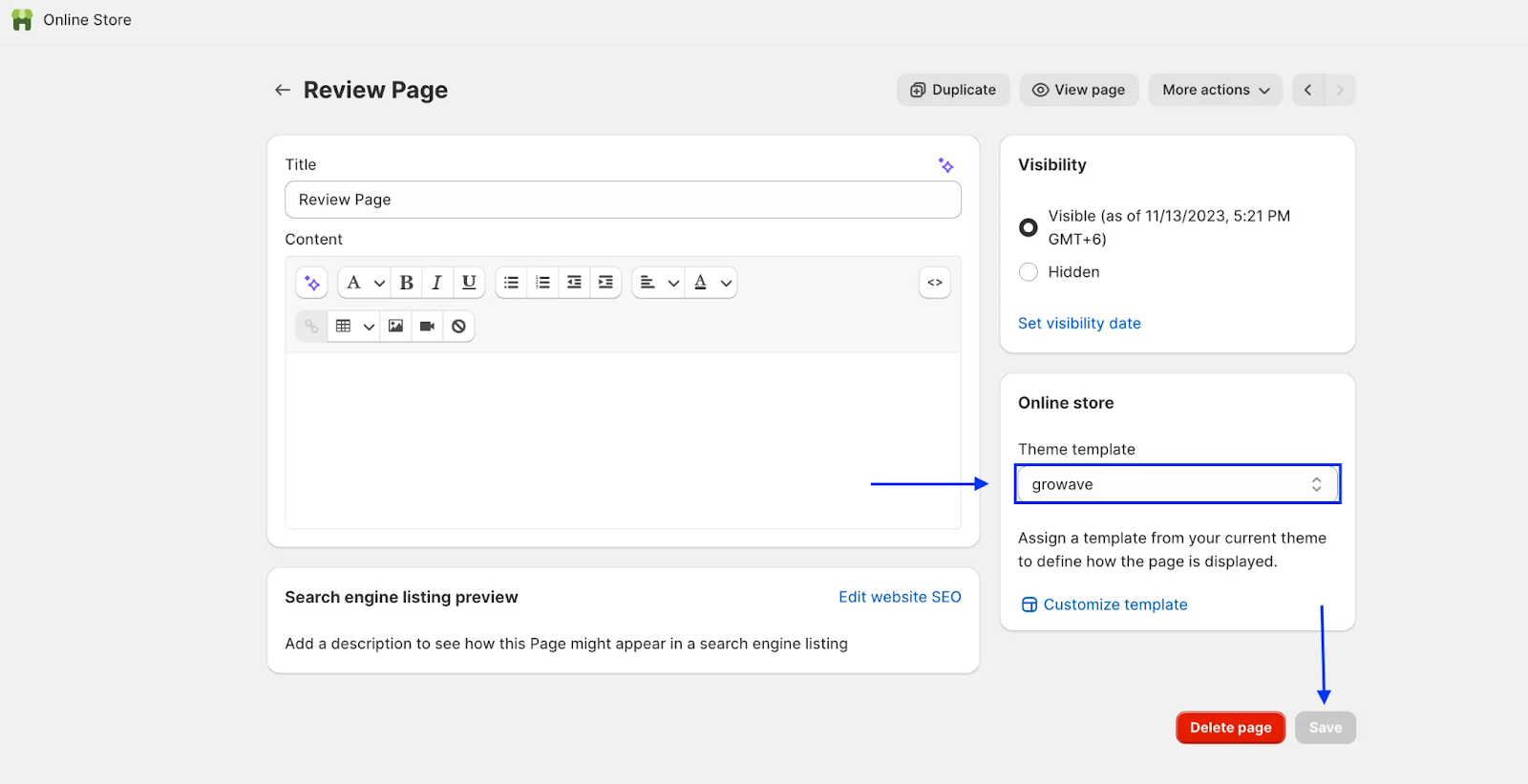
2. Adjust the layout of your review page by selecting the premade template that came with your review app. Remember to save your new page.
Changing template of page for reviews
3. Navigate to your Online store > then to your Theme and choose Customize. Change the page you want to customize at the top of the Shopify interface to the page you just created.
accessing your online store
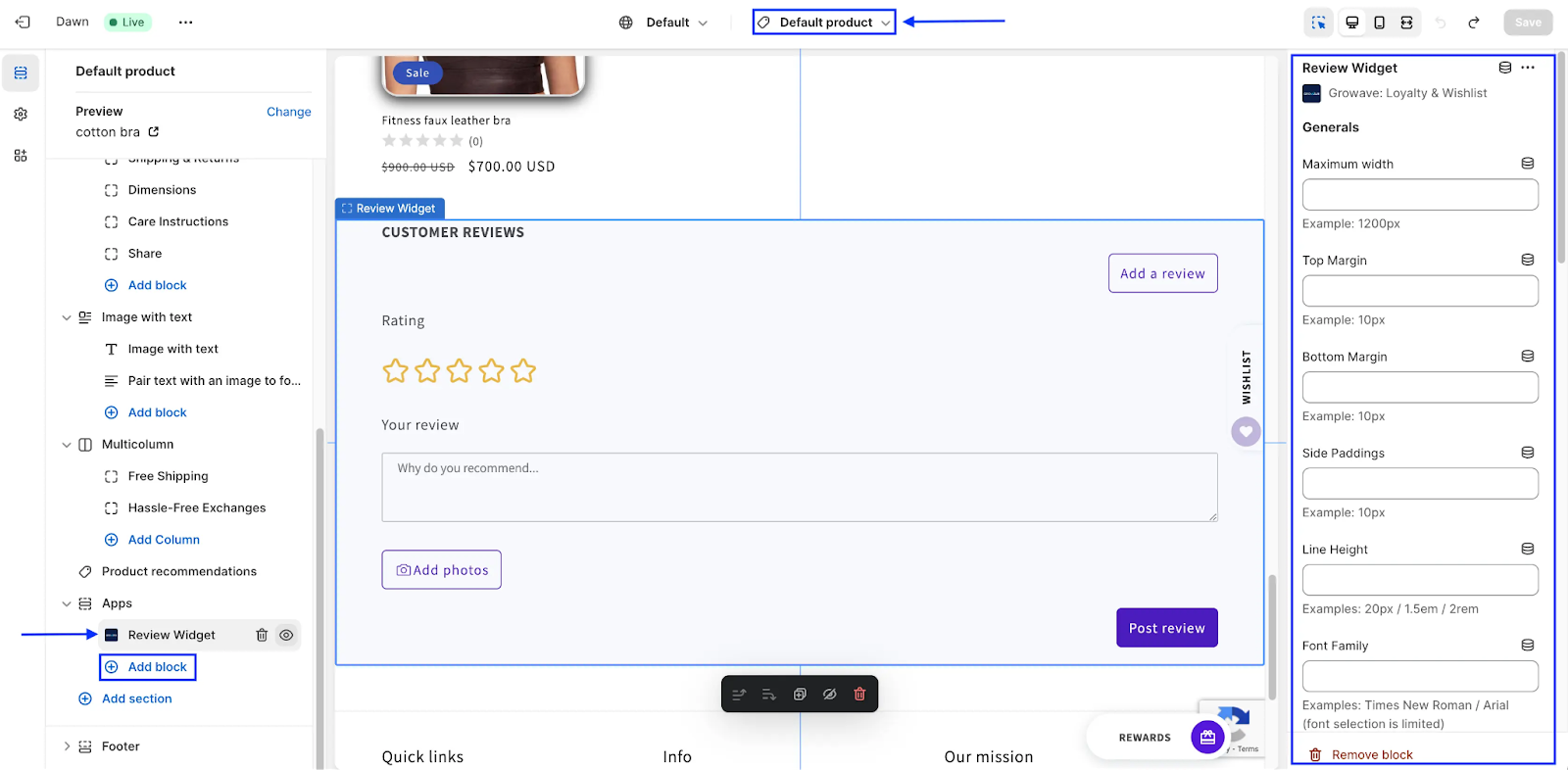
4. Dedicated Review Page: Once on your dedicated review page under the app section choose Add Block and select one of the drop down options from your review app. On the right of your Shopify interface you can adjust the app setting to fit your preference.
Creating and customizing product page reviews
Adding Reviews to Shopify - Review Slider
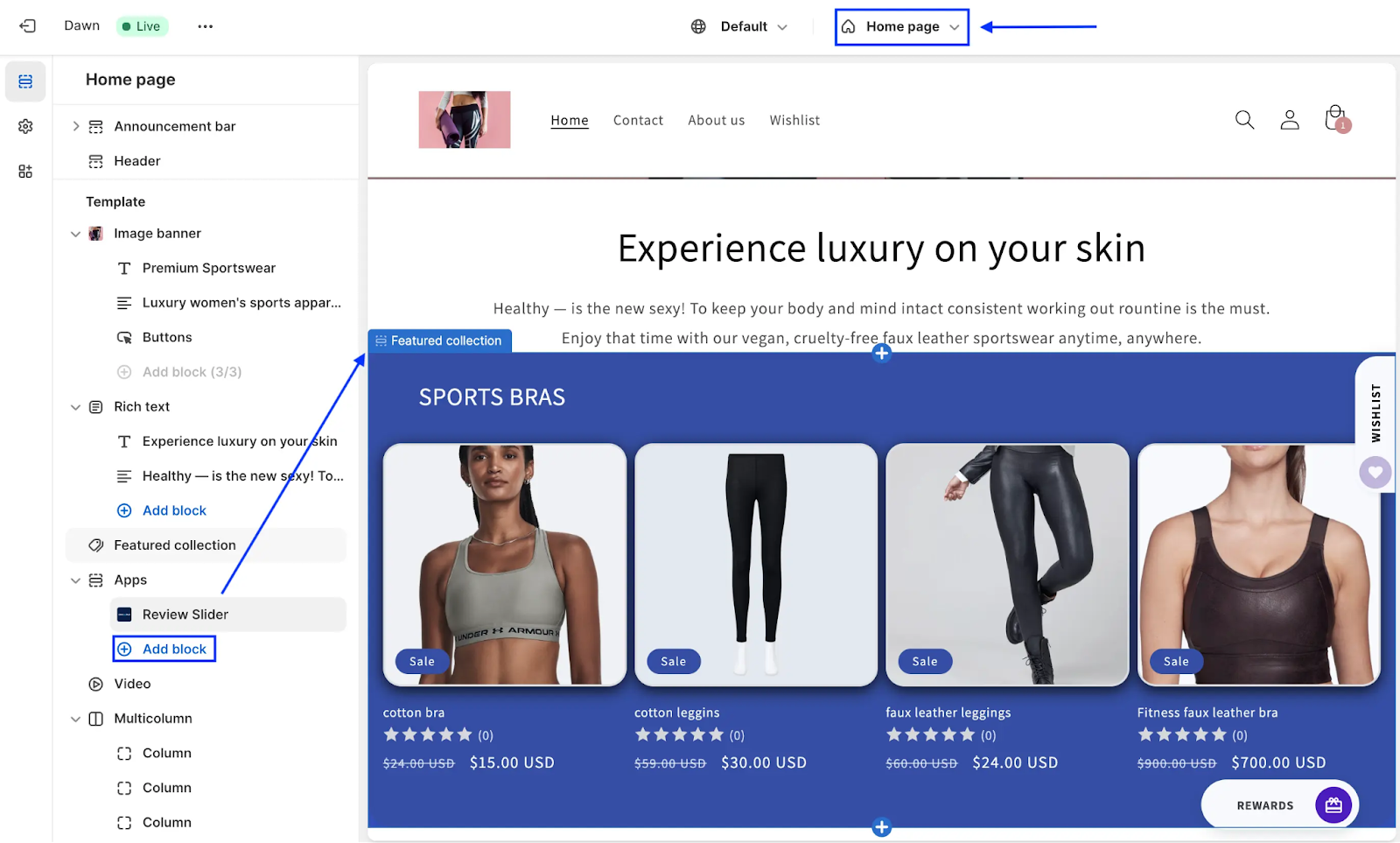
5. Begin from your Shopify admin panel and navigate to Sales Channel and Customize theme. Select the page you wish to add your review slider and under the Featured collection setting click on Add block and the feature you wish to implement.
Adding a review slider into your Shopify store
How to add reviews to Shopify - Product Page
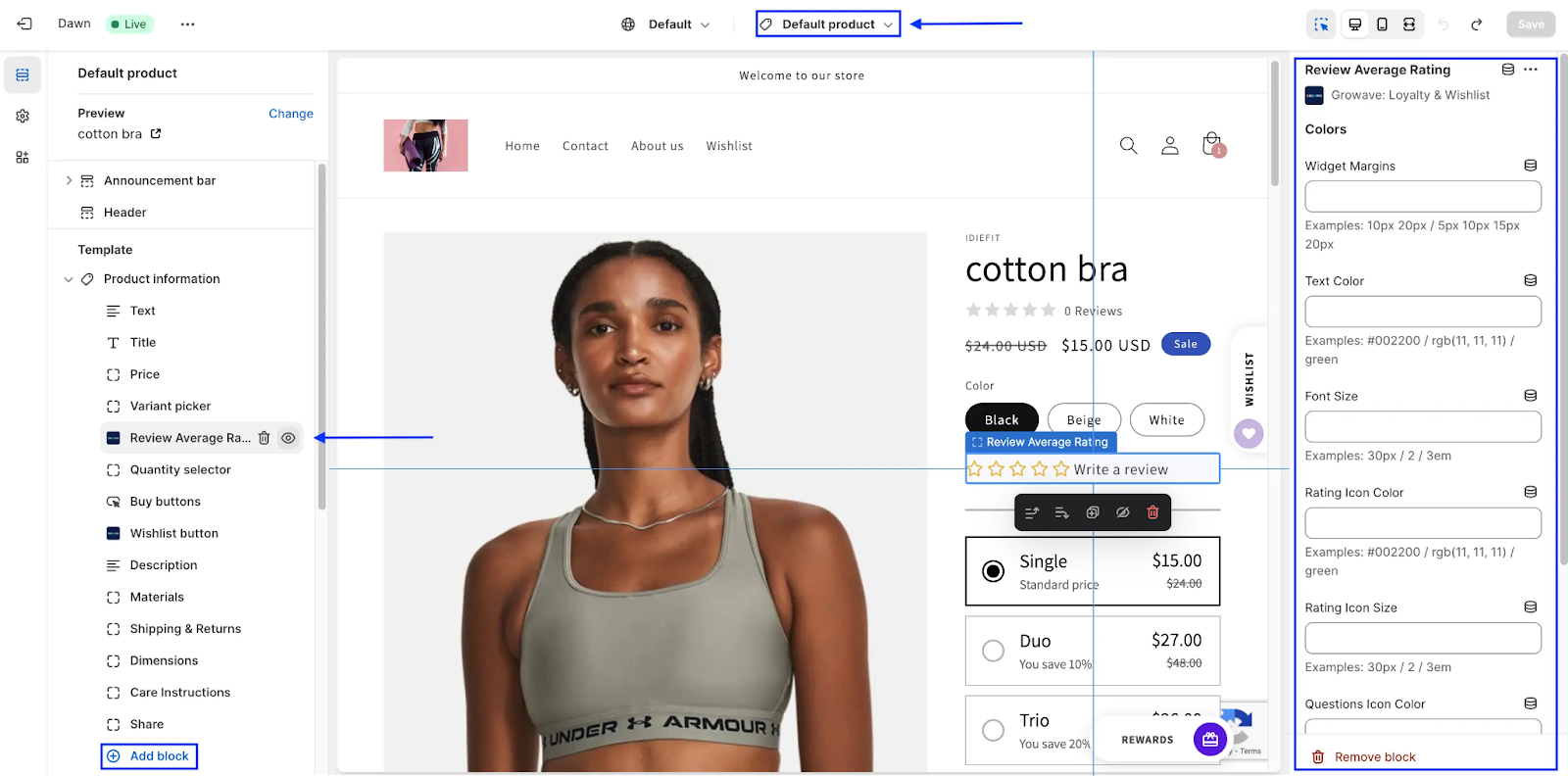
6. From the theme customization interface, select your product page and under Product information select the Add Block option and select the feature you want to include. On the right of your interface, customize your review settings to match your layout.
Creating a review rating section for your Shopify store
Customizing your review app in the Shopify admin panel
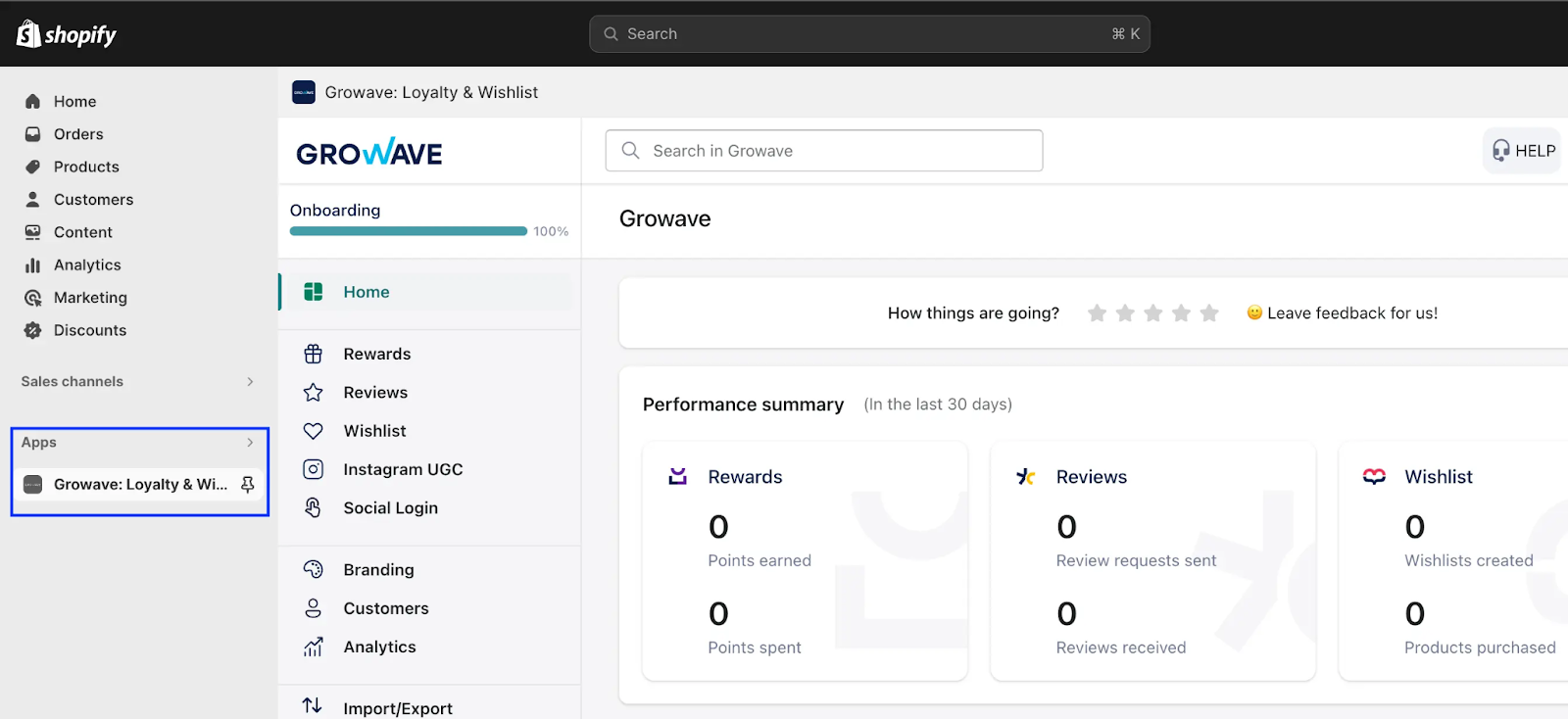
1. Begin by navigating to Apps > Reviews App, which will take you to the reviews app setting hub. From here you have full control over your Shopify reviews app, being able to control branding, analytics, emails and more.
Customizing your reviews on Shopify
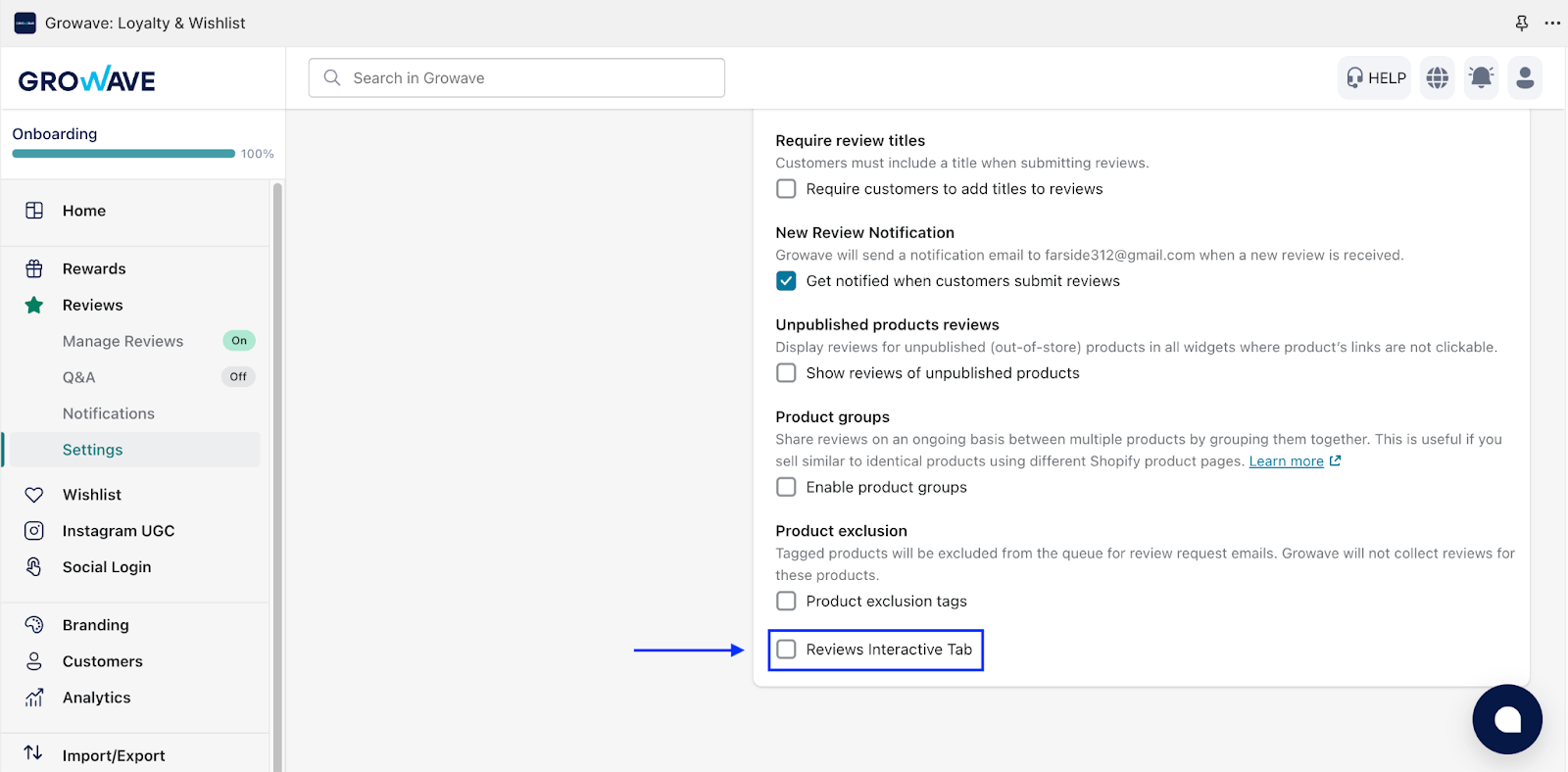
2. Enabling your Reviews Tab: Through the app settings navigate to Reviews > Settings and tick the options Reviews Interactive Tab. This option will also allow you to set your own branding and custom features.
Enabling a reviews side bar in your Shopify store
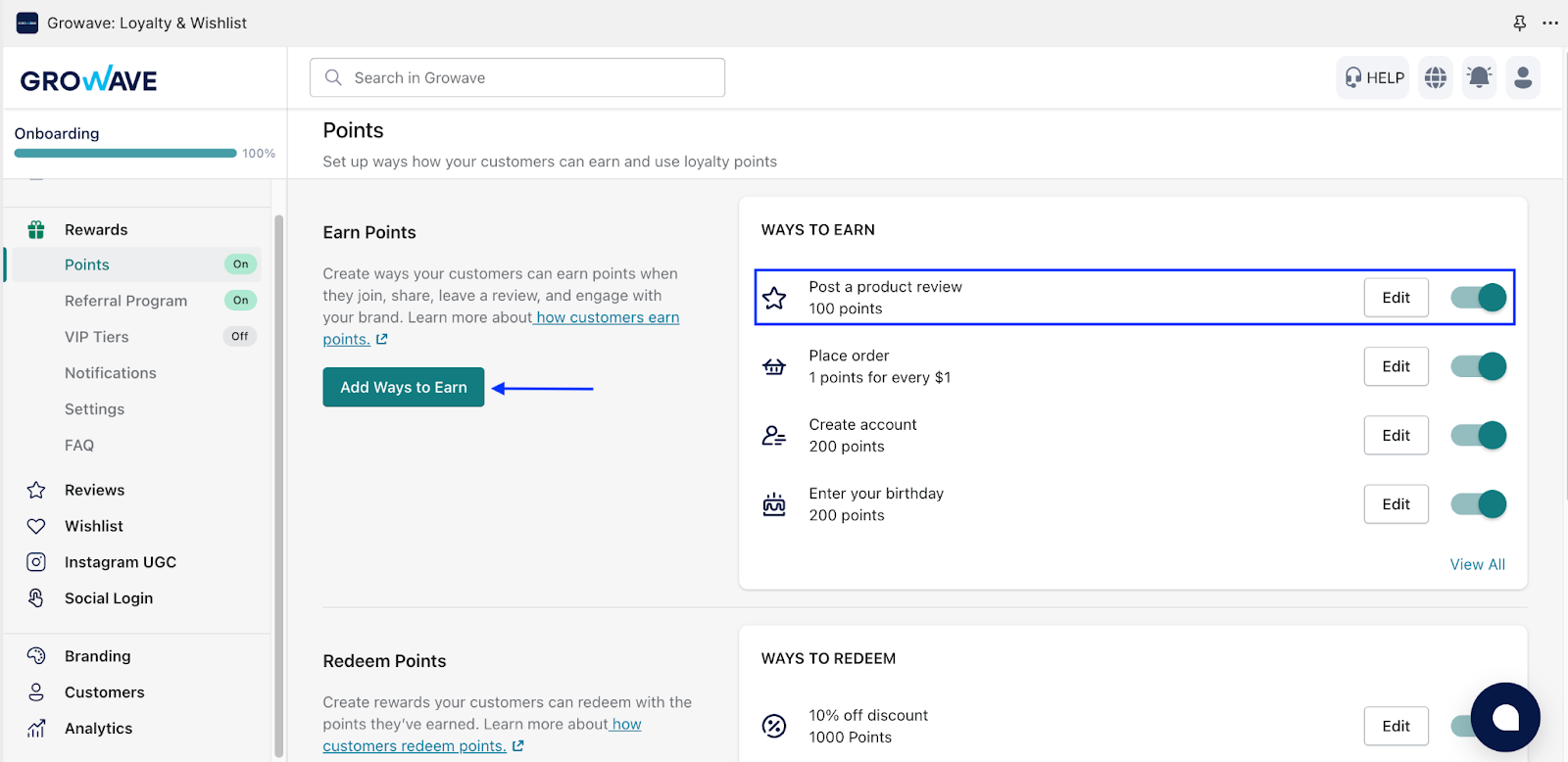
3. Create ways to earn points for reviews: Navigate to Rewards > Points > Add ways to Earn, which will lead you to the interface to create rewards, allowing you to award customer points of discounts for their reviews.
Implementing rewards for reviews with Shopify
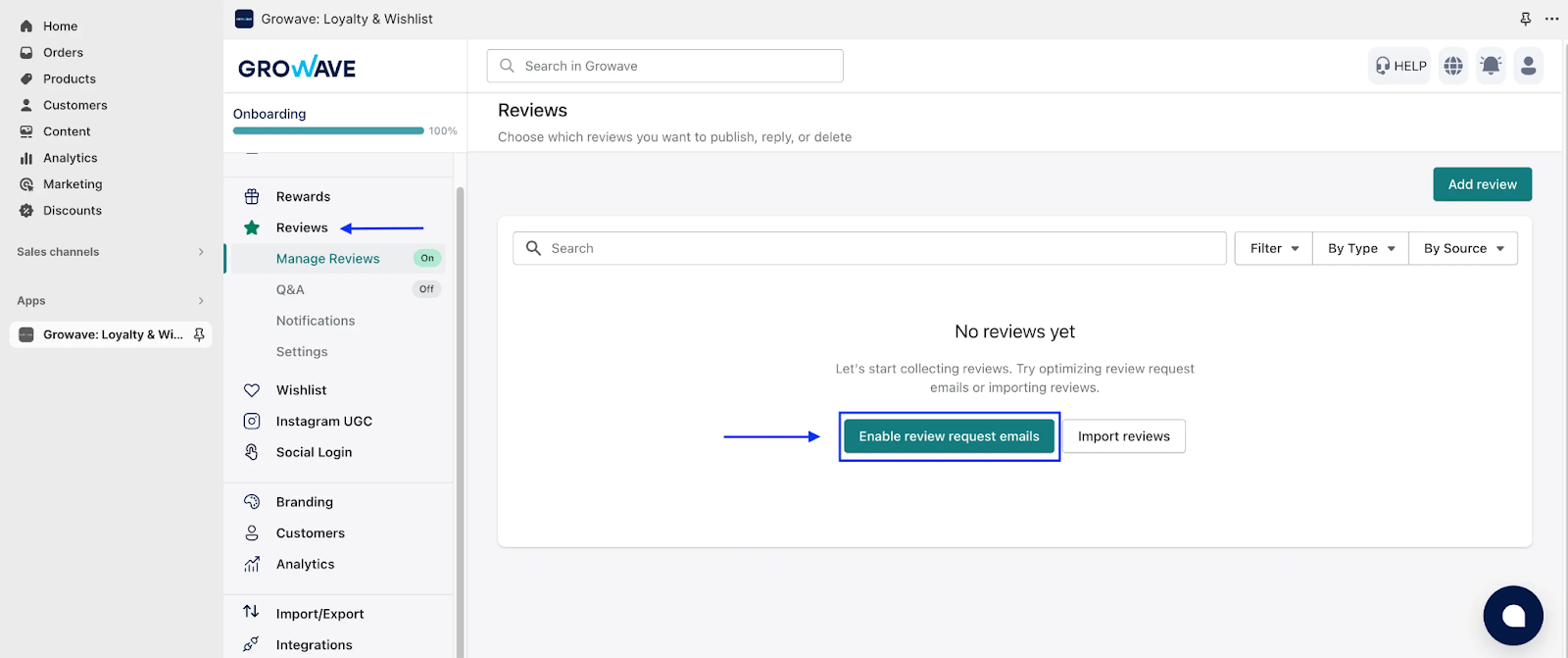
4. Enabling your Review Request Emails: From the App section of your Shopify store, select the Reviews tab and Enable review request emails. This will take you to the email customization window.
Enabling automated email review requests
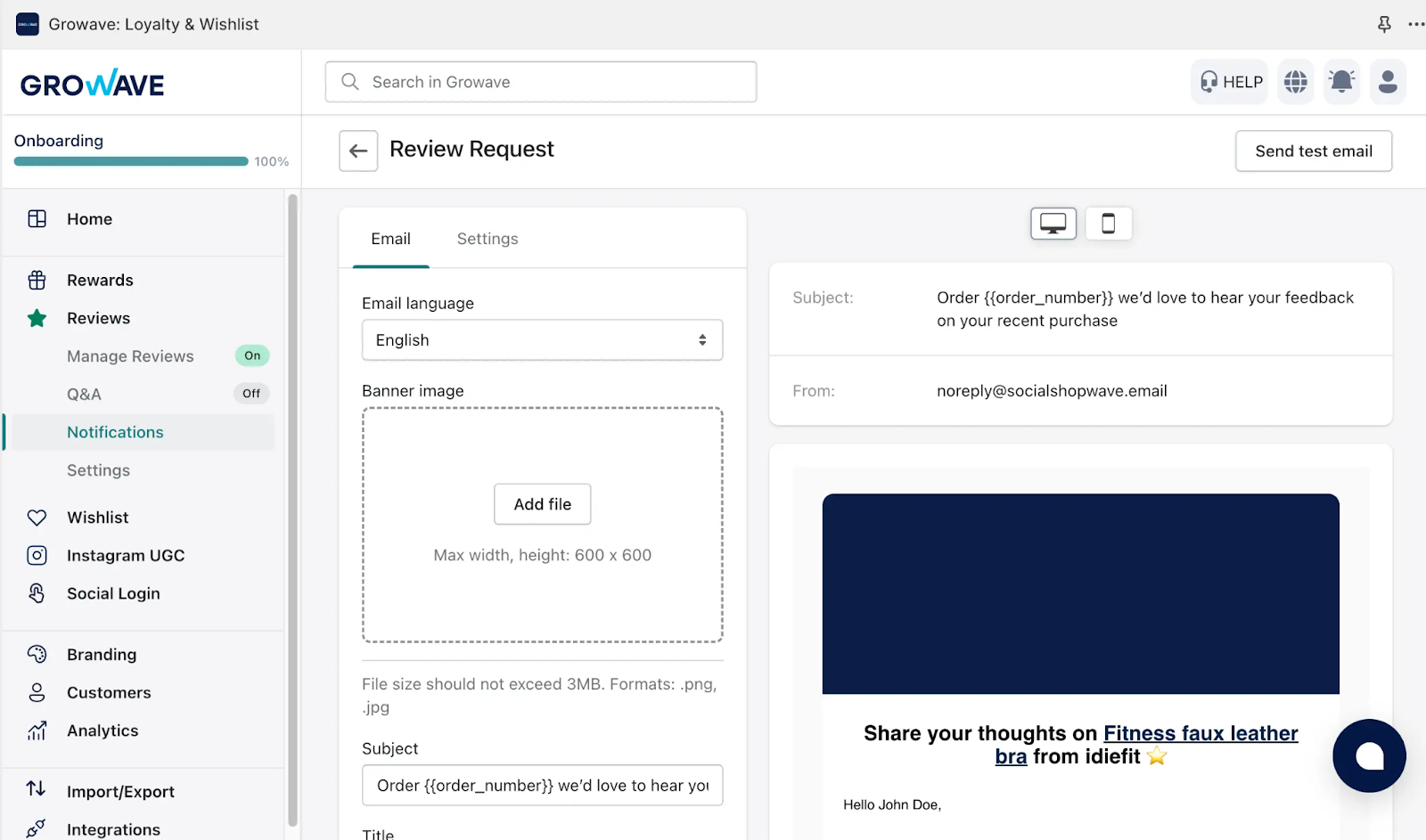
5. Customizing your Review Emails: Once the email customization interface opens, begin the process of building your own set of email marketing campaigns according to your needs and branding. These emails can be automated and fully branded for a variety of requirements.
Customizing your review emails for Shopify
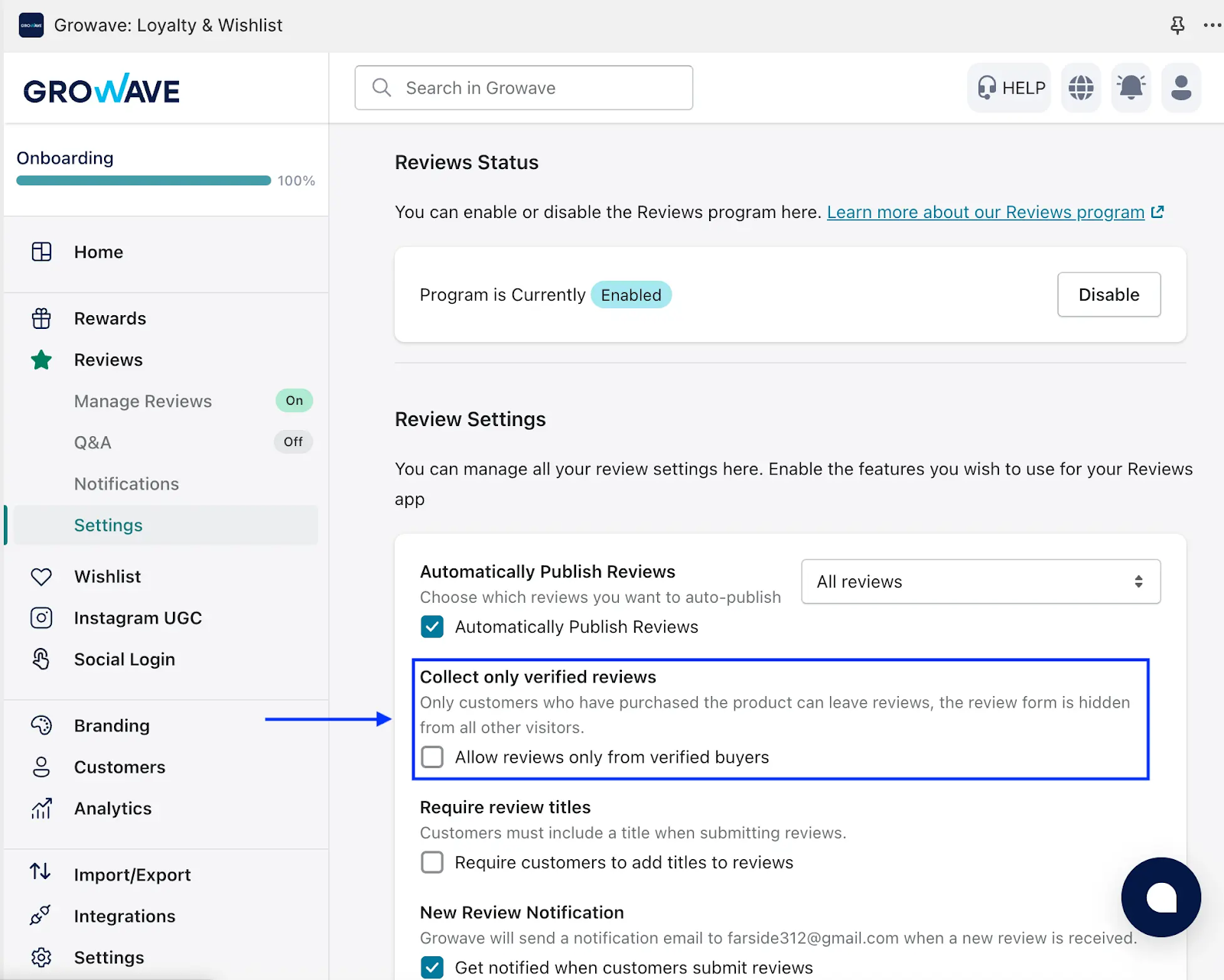
6. Enabling only Verified Reviews: To enable only verified reviews you will need to select Rewards from your reviews app and choose Settings. Tick the box titled Collect only verified reviews. This will require customer to register before leaving reviews.
enabling verified reviews
Getting More Out of Every Shopify Review
Installing the widget is the easy part. Two things separate stores with a handful of reviews from stores with thousands: timing, and what happens after someone leaves one.
Timing the ask. Send the request too early and the customer hasn't used the product yet. Too late, and the experience has faded. Most stores find the sweet spot is somewhere in the first one to two weeks after delivery — you already saw how to turn these emails on in Step Three, under Enabling your Review Request Emails.
Reward the effort, not just the rating. You can use the same Rewards > Points > Add ways to Earn screen from Step Three to award points specifically for photo or video reviews — not just any review. A review with a photo does more convincing than text alone, and when the reward is loyalty points instead of a one-off discount, the customer has a reason to come back and spend them.
Don't stop at the product page. A short carousel of your best reviews on the homepage builds trust before a shopper even picks a product. Star ratings under thumbnails on collection pages help people choose between similar items. And a review for the exact product sitting in someone's cart is one of the more effective things you can put in an abandoned-cart email.
Handling Negative Reviews
Every merchant dreads the one-star review, but a store with nothing but five stars can look suspicious too. A negative review handled well often builds more trust than a perfect record.
Acknowledge it publicly — don't get defensive, and don't ignore it.
Take the specifics offline — an email or phone number where the issue actually gets resolved.
Say what you're doing about it — a replacement, a refund, a fix.
If a review is spam, abusive, or clearly fake, Growave's moderation tools — the same "Collect only verified reviews" setting from Step Three — let you keep your review section genuinely useful rather than filtered down to only the positive ones.
Reviews and Search Visibility
Reviews do double duty: they build trust with shoppers, and they can get you star ratings directly in Google search results — which tend to pull more clicks than a plain text listing.
How rich snippets work. Google looks for review structured data (schema.org markup) on a product page. If it finds valid review and rating schema, it can show stars and a review count right in the search result.
Growave embeds this review and rating structured data automatically once a product has at least one review — there's no code to touch. If you also want full product schema (price, availability, and the rest), Growave integrates with partner apps like Webrex SEO Schema or Schema Plus to cover that layer too.
Once it's live, run a product page through Google's Rich Results Test to confirm the markup is detected. It can still take Google a few days to a few weeks to actually show the stars in search, even once everything is set up correctly — that part isn't something any app controls.
Step Four: Monitor and Respond to Reviews
Regularly monitor the reviews coming in and respond to them promptly. Address any negative feedback professionally and use it as an opportunity to improve your products or customer service. Engaging with reviews demonstrates your commitment to customer satisfaction. Optimizing your features like reward, email build, branding and others; can boost the effectiveness of your reviews for Shopify. You can find the analytics section under Apps in your Shopify admin panel, navigate towards the analytics section > reviews.
Analytical section- reviews for Shopify
Conclusion
Adding review to your Shopify store is a valuable strategy for building trust, enhancing customer confidence, and ultimately boosting sales. By selecting the right review app, configuring it to your needs, and actively collecting and showcasing reviews, you can leverage the power fo social proof to grow your e-commerce business and create a positive shopping experience for your customers.
FAQ
Do reviews impact SEO?
Reviews are excellent for SEO and make your shop stand out. They refresh your product pages with new content and can be featured across your marketing channels.
Can guests leave reviews, or do customers need an account?
You're in control. Growave lets you decide who can leave reviews, what kind of reviews they can leave, and which reviews are visible — including whether to require a customer account first.
Where can reviews be displayed on my store?
Reviews can show up almost anywhere: in pop-up widgets, on a dedicated reviews page, on product pages, in email requests, on collection pages, and in your own marketing and social content. They're also commonly used as star ratings under product thumbnails and in abandoned-cart emails.
How can I get more customers to leave reviews?
Make it easy — a compact widget that sits right on the page does more than a buried link. It also helps to reward reviews, especially photo and video ones, and to time your request for when the customer has actually had a chance to use the product.
Can I import reviews from another platform?
Most review platforms, Growave included, support importing your existing reviews rather than starting from zero. If you're migrating from another app or marketplace, it's worth checking with support first so your star ratings and verified-purchase status carry over correctly.
Should I reward customers for leaving reviews?
Yes — just reward the review, not the rating, so you don't end up biasing what people say. Loyalty points work better than one-off discounts for this, since they give the customer a reason to come back and spend what they've earned.
No items found.
Thank you! Your submission has been received!
Oops! Something went wrong while submitting the form.
Want to close the gap?
Our team can help identify what’s holding back your retention and implement proven strategies tailored to your niche.
If you’re open to switching, we’ll buy out your existing loyalty contract and help push your numbers even further with personalized insights and automation.
Oops! Something went wrong while submitting the form.
Dastan Chikeev
Content Manager
Dastan Chikeev is a Content Manager with Growave, one of the fastest growing loyalty marketing platforms for Shopify stores. Growave helps thousands of Shopify merchants create dynamic, engaging, and sophisticated experiences for their customers. Dastan is an avid writer who specializes in digital marketing and e-commerce. His content has helped countless businesses implement more precise e-commerce strategies. He believes that the key to success in this industry is iteration and exercising customer expectations.