Loyalty vs Retention: Key Differences, Metrics and Strategies
Loyalty vs Retention: Key Differences, Metrics and Strategies
The customer is the foundation of any business. The first step in creating a loyal customer base is to focus on your existing one. In this article, you'll learn how to retain customers and boost loyalty.
Last updated on
Published on
April 5, 2024
March 25, 2026
•
15
minutes
In today’s saturated markets, businesses rarely struggle to find competitors - they struggle to stand out. Customers are flooded with similar products, comparable prices, and endless choices. Capturing attention is difficult, but keeping it, however, is what truly drives growth.
Customer loyalty is no longer a “nice to have”; it is a powerful engine of sustainable success. Loyal customers don’t just buy again, they generate predictable revenue, increase lifetime value, and become trusted advocates who influence others.
For businesses that want to grow smarter, not just faster, retention is a strategic priority. By investing in meaningful experiences and lasting relationships, companies can cut acquisition costs, build deeper trust, and create momentum that competitors struggle to replicate.
Customer Loyalty and Retention: What’s the difference?
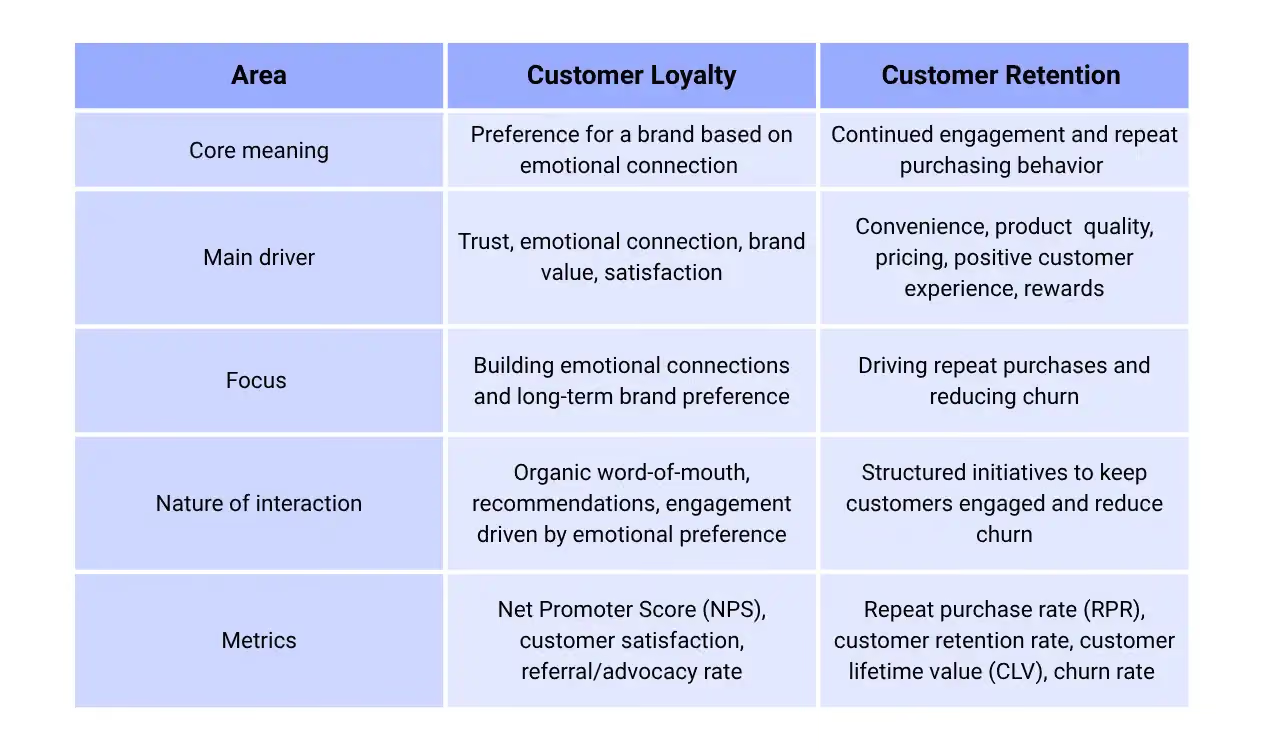
Customer loyalty and customer retention are closely related, but they are not the same. Let’s start with the basic definitions:
Customer retention measures whether customers continue buying from your business over time.
Customer loyalty measures how strongly customers prefer your brand over alternatives and whether they are likely to buy again, stay engaged, and recommend you to others.
A customer can keep purchasing from a brand without feeling loyal to it. For example, they may keep buying because your price is convenient or switching requires effort. A loyal customer, however, chooses your brand even when competitors offer similar products, because they trust your brand, value the experience, and feel a stronger connection to it.
Here’s a quick comparison of customer loyalty and retention across key areas:
How Loyalty and Retention Work Together
Retention creates the conditions for loyalty, and loyalty makes retention stronger.
When customers consistently get what they expect, they are more likely to return. When those positive experiences continue across product quality, service, communication, and rewards, retention can turn into loyalty. Once loyalty is established, customers are less likely to switch, more likely to forgive occasional mistakes, and more willing to recommend your brand.
Retention is the foundation for growth, while loyalty is the main goal.
Why Loyalty and Retention Matter for Ecommerce Brands
In ecommerce, acquisition costs are high and competition is constant. Brands that rely only on first-time purchases are more vulnerable to rising ad costs and shrinking margins. Real leverage comes after the first purchase, when customers choose to return.
Retention helps generate consistent revenue from your existing customer base, while loyalty increases purchase frequency, average order value, referrals, and long-term brand preference. Winning the first purchase delivers quick wins, but repeat purchases drive lasting growth.
Retention supports short-term revenue through repeat purchases. Loyalty builds a deeper emotional connection that drives advocacy, increases perceived value, and makes customers more willing to pay higher prices.
How Loyalty Programs Improve Customer Retention?
Loyalty programs improve customer retention by offering meaningful incentives for repeat purchases and ongoing engagement. Through points, rewards, exclusive perks, and tiered benefits, they encourage customers to consistently choose a brand over its competitors.
By driving regular purchases and interactions, these programs increase purchase frequency and customer lifetime value. Personalized rewards and recognition also strengthen emotional connections, making customers feel valued and more likely to remain loyal. When implemented effectively, loyalty programs reduce churn, boost satisfaction, and turn loyal customers into brand advocates.
Why Is Retention Low Despite Repeat Purchases?
A customer may buy twice and still not be loyal. This usually happens when repeat purchases are driven by convenience or discounts rather than trust.
Common causes include:
Weak post-purchase experience
Poor onboarding or unclear product value
Slow support or unresolved issues
Friction in checkout, shipping, or returns
Generic messaging that does not reflect customer behavior
Rewards that feel complicated or low value
If customers only come back because of discounts, retention may look healthy in the short term, but loyalty will remain weak.
Risks of Neglecting Customer Loyalty and Retention
Neglecting customer loyalty and retention can quietly weaken a business over time. Without consistent engagement, customers drift to competitors offering better value or experience, increasing churn and forcing brands to spend more on acquisition just to maintain sales.
It also means lost revenue from repeat purchases, upsells, and long-term relationships, reducing overall customer lifetime value. At the same time, fewer loyal customers lead to fewer referrals and less positive word-of-mouth, making it harder to build trust and grow organically.
Ultimately, ignoring retention creates an unstable foundation where revenue becomes less predictable, costs rise, and long-term competitiveness declines.
How to Measure Customer Loyalty and Retention
Customer loyalty and retention are key indicators of long-term business performance and sustainable growth. While loyalty reflects customers’ attitudes and advocacy, retention captures their actual purchasing behavior over time.
Customer Loyalty Metrics
Customer loyalty measures the strength of customers’ emotional connection and willingness to recommend or support a brand.
Net Promoter Score (NPS)
NPS is a metric for measuring customer loyalty and satisfaction. It measures how willing customers are to recommend products or services to their friends and family. Based on the straightforward question: “How likely are you to recommend us to your friends and family?”.
NPS = % Promoters − % Detractors
Customer Satisfaction (CSAT)
Customer Satisfaction Score shows how happy customers are with a specific experience, such as a purchase or support interaction. It’s usually measured by asking customers to rate their satisfaction on a scale (for example, 1 to 5).
CSAT = (Number of positive responses ÷ Total number of responses) × 100
Referral Rate
Referral Rate measures how many of your customers actively recommend your brand to others. It helps you understand how effectively your existing customers drive new customer acquisition through word of mouth.
Referral Rate = (Number of customers who refer others ÷ Total number of customers) × 100
Customer Retention Metrics
Repeat Purchase Rate (RPR)
Repeat Purchase Rate measures the percentage of customers who make more than one purchase from your store. It helps you understand how effectively your business encourages customers to come back and buy again.
RPR = (Number of returning customers ÷ Total number of customers) × 100
Customer Retention Rate (CRR)
Customer Retention Rate shows the percentage of customers a business keeps over a specific period of time. It helps you understand how well you maintain ongoing relationships with your existing customers.
CRR = ((Customers at end of period − New customers acquired) ÷ Customers at start of period) × 100
Customer Lifetime Value (CLV)
Customer Lifetime Value (CLV) estimates the total revenue a business can expect from a customer over the entire duration of their relationship. It helps you understand how valuable each customer is in the long run.
CLV = Average order value × Purchase frequency × Customer lifespan
Churn Rate
Churn Rate measures the percentage of customers who stop buying from your business over a given period. It helps you understand how quickly you are losing customers.
Churn Rate = (Customers lost during period ÷ Total customers at start of period) × 100
Improving customer retention and loyalty requires a consistent, data-driven approach. By understanding customer behavior, delivering personalized experiences, and continuously optimizing interactions, businesses can build stronger relationships and encourage repeat engagement over time.
Understand Customer Behavior
Start by analyzing how customers interact with your brand. Look at browsing patterns, purchase history, and feedback to identify friction points and what drives repeat purchases. These insights help you remove obstacles, refine your strategy, and create experiences that keep customers engaged over time.
Unify Data and Engagement Channels
When customer data is scattered across different tools, it’s hard to understand behavior and deliver consistent experiences. Bringing everything together - loyalty programs, reviews, wishlists, and user-generated content, gives a complete view of your customers. This makes it easier to send relevant, personalized messages across touchpoints, encouraging repeat purchases and strengthening long-term relationships.
Deliver Exceptional Customer Support
Make it easy for customers to get help when they need it, responding quickly and with empathy. Solving problems effectively not only resolves immediate issues but also builds trust and confidence in your brand. Consistently positive support experiences reinforce satisfaction and encourage customers to return.
Reward Repeat Behavior with Loyalty Programs
Encourage repeat purchases and engagement by offering points, discounts, or exclusive perks. Rewarding actions like purchases, reviews, and referrals motivates long-term loyalty. The rewards should be meaningful and valuable to customers, as this will drive active participation. Well-designed programs can also attract new customers, who see the benefits of joining and engaging with your brand.
Measure Revenue Impact
Track the performance of your retention efforts to understand what drives revenue. Monitor metrics like repeat purchase rate, customer lifetime value, and engagement to evaluate success. Measuring results helps you optimize your strategy and demonstrate the real business impact of your efforts.
Segment and Personalize Customer Experiences
Divide your customers into meaningful groups based on behavior, preferences, or purchase history. Use this information to deliver tailored messages, recommendations, and offers that resonate with each group. Personalized experiences make customers feel understood, which increases engagement, repeat purchases, and long-term loyalty.
Thank you! Your submission has been received!
Oops! Something went wrong while submitting the form.
Want to close the gap?
Our team can help identify what’s holding back your retention and implement proven strategies tailored to your niche.
If you’re open to switching, we’ll buy out your existing loyalty contract and help push your numbers even further with personalized insights and automation.
Ask for feedback through surveys, reviews, and ratings to understand what your customers value most. Use these insights to identify friction points and uncover opportunities for improvement. Continuously refining your offerings ensures your experience meets customer expectations and strengthens long-term loyalty.
Key Customer Loyalty and Retention Trends
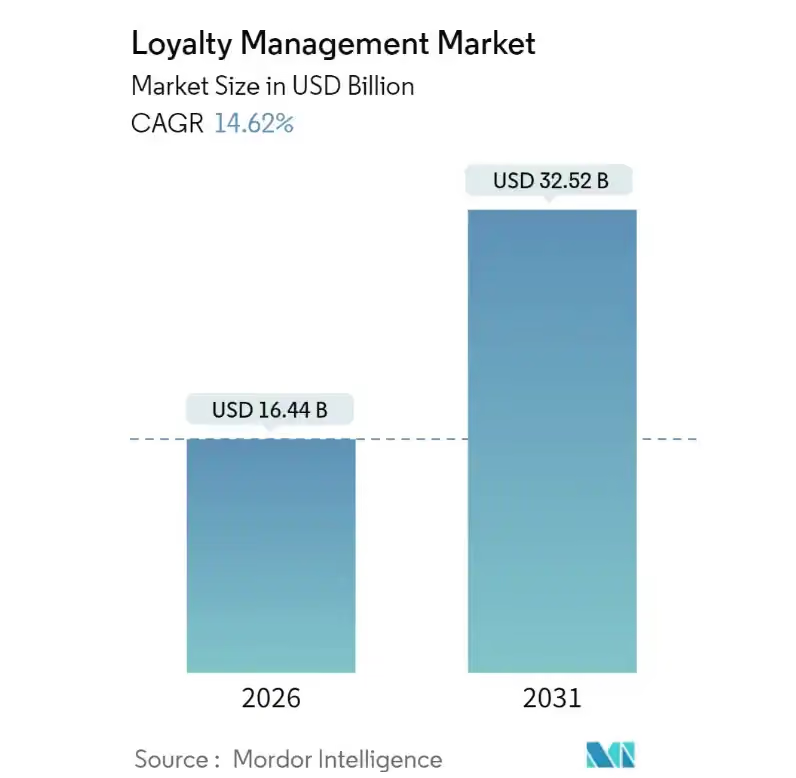
The loyalty marketing industry is experiencing rapid growth as businesses increasingly prioritize retention over acquisition, with the global loyalty management market projected to expand from $16.4 billion in 2026 to $32.5 billion by 2031 - an annual growth rate of nearly 15%. As customer expectations rise, brands are investing in advanced engagement technologies to deliver more personalized, seamless experiences, driving new trends in customer loyalty and retention.
AI-Powered Hyper-Personalization
AI-powered hyper-personalization takes traditional personalization to a deeper level by using real-time data and machine learning to tailor every interaction to the individual customer. Predictive analytics can flag customers at risk of churning and trigger personalized retention offers automatically, while behavioral insights identify opportunities to reward positive actions even before the customer expects recognition. By matching the right reward to the right profile, brands can offer highly personalized loyalty experiences at scale, boosting engagement, satisfaction, and long-term loyalty.
Mobile-First and Omnichannel Approach
Mobile is where customers spend most of their time, and loyalty programs need to meet them there. 77% of businesses now prioritize mobile experiences as the main touchpoint for rewards, but the best programs go further, creating seamless omnichannel experiences across apps, desktop, and in-store. Shopify stores that combine a mobile app like NAPPS with an all-in-one retention platform like Growave can integrate rewards, VIP tiers, and points directly into the app, giving customers a reason to come back. Even simple push notifications help drive repeat purchases, making loyalty effortless while boosting engagement and lifetime value.
Green Loyalty Programs
Today’s customers, especially Gen Z and Millennials, increasingly choose brands that align with their values, and sustainability is at the top of their list. Green loyalty programs tap into this mindset by rewarding eco-friendly behavior, such as choosing sustainable products, recycling, using reusable packaging, or opting for slower shipping to reduce emissions.
These programs not only encourage repeat purchases but also strengthen emotional connections with environmentally conscious customers. By giving points, discounts, or exclusive perks for sustainable actions, brands turn loyalty into a shared mission, showing that repeat shopping can also have a positive impact. Green loyalty proves that retention and sustainability can work hand in hand, building trust, engagement, and long-term loyalty.
Conclusion
Customer retention keeps your business running, but customer loyalty is what drives long-term growth. Together, they turn one-time buyers into repeat customers and repeat customers into advocates who trust your brand and choose it consistently.
In a crowded market, winning attention is only the first step. The real advantage comes from delivering experiences that make customers want to return, engage, and stay. Brands that invest in both retention and loyalty build stronger relationships, more predictable revenue, and a competitive edge that’s difficult to replicate.
FAQ
Why are customer loyalty and retention important for ecommerce businesses?
In the competitive ecommerce landscape, retaining existing customers is more cost-effective than acquiring new ones. Loyal customers tend to make repeat purchases, spend more over time, and are more likely to recommend the brand to others. Focusing on loyalty and retention strategies can lead to increased customer lifetime value and sustainable business growth.
What strategies are effective for increasing customer retention?
Effective customer retention strategies include implementing loyalty programs that reward repeat purchases, soliciting and acting on customer feedback, providing consistent and high-quality customer service, and maintaining regular communication through email marketing and social media. These approaches help keep customers engaged and encourage them to continue doing business with the company.
What is the difference between customer loyalty and customer retention?
Customer loyalty refers to the emotional connection and preference a customer has for a brand, leading them to choose it repeatedly over competitors. Customer retention, on the other hand, focuses on the strategies and actions a company employs to keep customers returning over time. While loyalty is about the customer's feelings and commitment, retention is about the company's efforts to maintain ongoing relationships.
How do customer loyalty and retention metrics differ?
Retention metrics track behavior , whether customers keep buying (e.g., RPR, CRR, CLV). Loyalty metrics measure attitude, how customers feel about your brand and if they’ll recommend it (e.g., NPS, CSAT).
How can businesses improve customer loyalty?
Businesses can enhance customer loyalty by providing exceptional customer service, personalizing the shopping experience, offering loyalty programs, and engaging customers through consistent communication. Understanding customer needs and preferences allows companies to tailor their offerings, fostering a deeper connection and encouraging repeat business.
Unlock retention secrets straight from our CEO
Thank you! Your submission has been received!
Oops! Something went wrong while submitting the form.
Erlan Emilev
Content Manager
Erlan Emilev is a Content Manager at Growave and a customer loyalty specialist focused on helping eCommerce brands build lasting relationships with their customers. He writes about loyalty programs, retention strategies, and customer engagement, translating complex ideas into clear, actionable insights for growth-focused teams. In addition to editorial work, Erlan creates high-impact, conversion-focused content across the customer journey, including landing pages and case studies. His work is driven by a single goal: helping brands turn one-time buyers into loyal, repeat customers.















.svg)